


A Palace with an Ancient Heart
Within the walls of history that guard centuries of Neapolitan traditions
The Historic House
In the heart of Sant’Antimo stands a palace that recounts centuries of Neapolitan history, where every stone whispers ancient memories and every archway guards the authentic soul of the Aversa countryside.
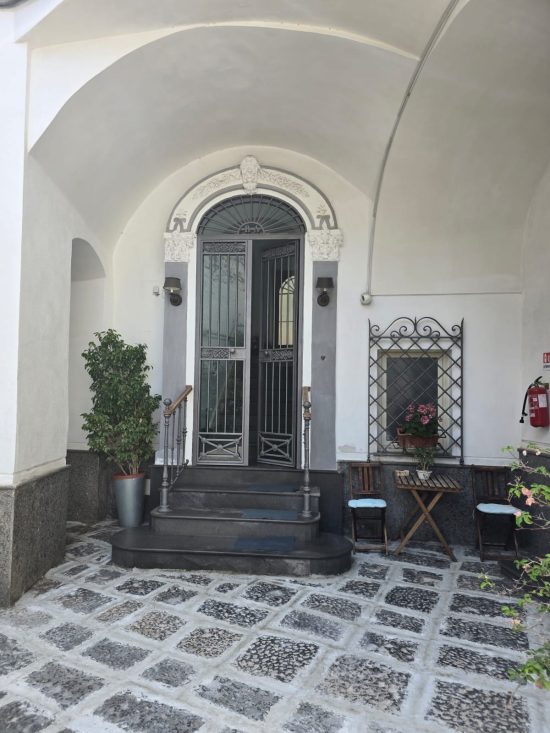
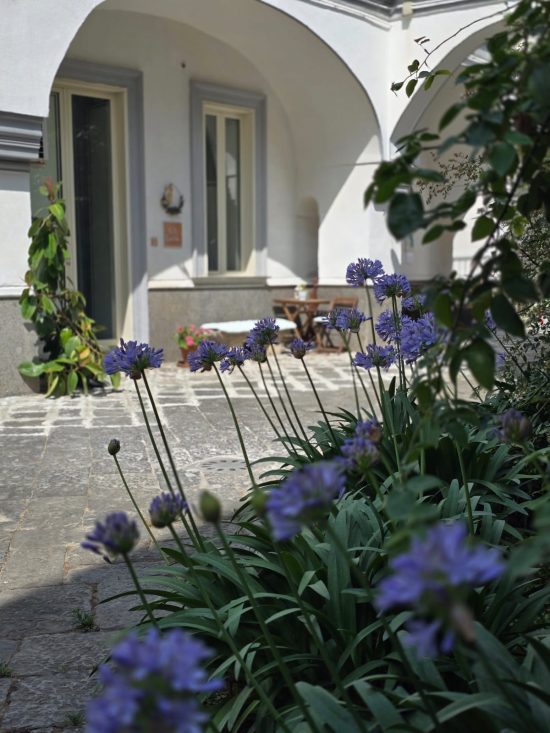
The Palazzo a Corte Chiusa at B&B La Corte represents a perfect example of the typical architecture of the Aversa countryside, built between 1600 and 1800 around a magnificent central courtyard.
Traditional Architecture
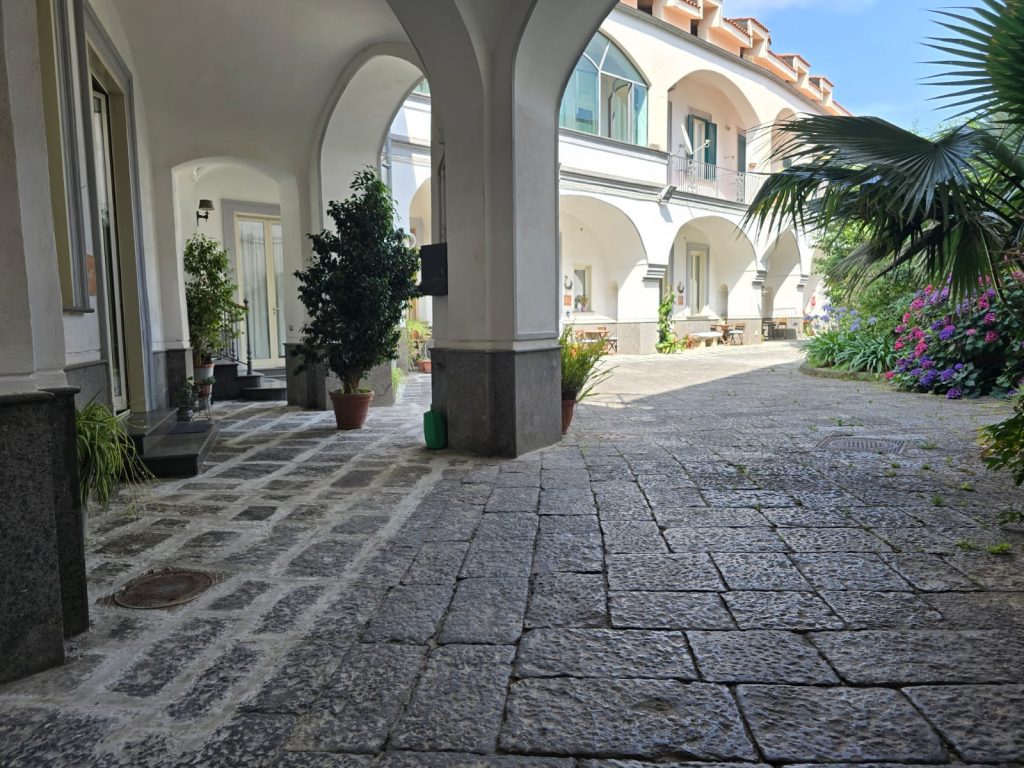
The structure, characterized by its “L” shape, is designed to ensure excellent ventilation of the rooms. The mighty arches on the ground floor create a play of light and shadow that gives the courtyard a timeless charm.
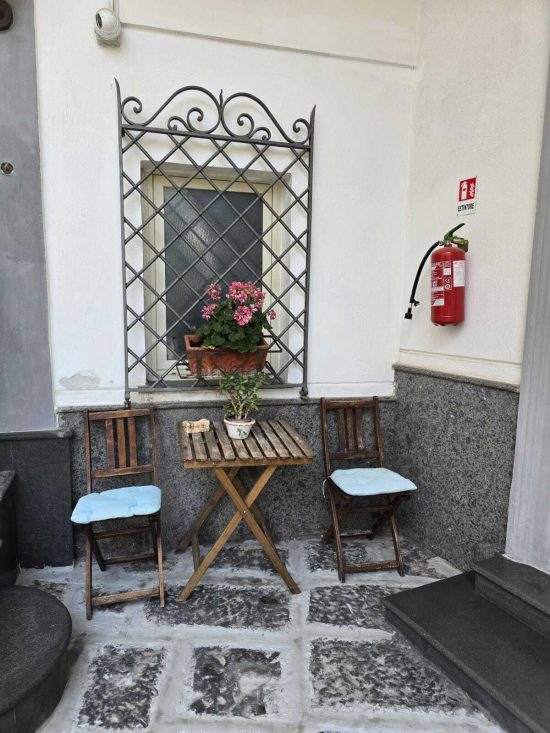
The paving of the courtyard, made of Vesuvian lava stone (basole) worked with “puntillo grosso,” testifies to the ancient Neapolitan building tradition and the deep connection with the region’s volcanic terrain.
The Architectural Elements
The Historic Arches
The mighty arches on the ground floor are not just decorative elements, but served practical functions: they provided shelter and created cool spaces during the Mediterranean summer.
The Belvedere
On the upper floor, the large terrace called the "belvedere" offered a panoramic view of the surroundings and was a privileged vantage point.
The Passetto
A characteristic external corridor provided access to the rooms, a typical element of local architecture that ensured privacy and independence.
The Neapolitan Balconies
The balconies facing the street are "defended" by typical Neapolitan shutters, which allow views to the outside while remaining invisible from the inside.
The Lava Stone
Vesuvian lava stone paving worked with "puntillo grosso" represents a testament to local craftsmanship and connection to Vesuvius.
The Service Spaces
The well, cistern, washhouse and cave testify to the self-sufficiency of the dwelling and the skillful management of water resources.
Through the centuries
Built between 1600 and 1800, this enclosed courtyard palace holds centuries of Aversan history. Since the 17th century it has housed votive shrines of Our Lady of Mount Carmel, while in the 19th century it became a center of production of the famous “Sant’Antimo Crystal” under the Bourbons. Today, artist Romy Nardi has restored the mansion to its former glory: her contemporary works dialogue with the historic architecture, transforming the palace into a unique place where art and hospitality come together.